

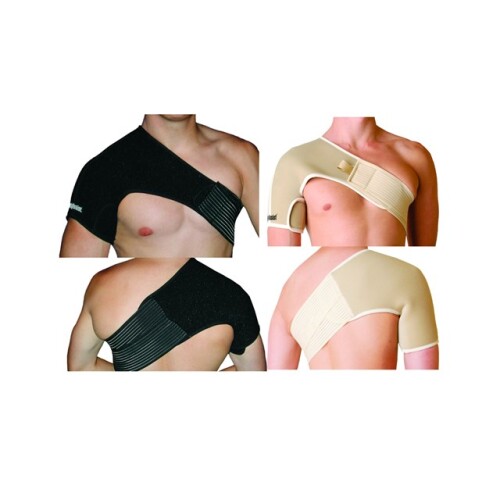
What this item is designed to do: Provides therapeutic warmth, compression and gentle shoulder support to help veterans manage pain, improve comfort and maintain function during daily activities, rehabilitation and recovery from service-related shoulder conditions.
Key features to know:
- Multi-directional neoprene compression helps reduce soft tissue swelling and provides support.
- Therapeutic warmth may assist in reducing pain and stiffness commonly associated with chronic shoulder conditions.
- Adjustable hook-and-loop straps allow easy self-application and customised compression.
- Contoured design accommodates a variety of body shapes and activity levels.
- Lightweight and suitable for use during everyday activities, exercise and rehabilitation.
- Designed to support movement while helping protect vulnerable shoulder structures.
Why veterans may need this: Many veterans experience ongoing shoulder pain resulting from military training, load carriage, repetitive lifting, weapon handling, vehicle operation and physically demanding service roles. The Sports Thermal Shoulder Brace provides warmth, compression and support to help manage symptoms, improve comfort and maintain independence in daily activities.
Common veteran injuries and conditions:
- Service-related rotator cuff injuries and tendinopathy.
- Chronic shoulder pain associated with military service.
- Shoulder impingement syndrome.
- AC joint injuries and sprains.
- Shoulder bursitis and tendonitis.
- Mild shoulder instability.
- Repetitive strain injuries from manual handling and operational duties.
- Degenerative shoulder conditions including osteoarthritis.
When it is most appropriate:
- Ongoing shoulder pain affecting daily function.
- Recovery from soft tissue shoulder injuries.
- Veterans requiring additional support during exercise or rehabilitation.
- Activities involving lifting, carrying or repetitive arm movements.
- Managing flare-ups of chronic shoulder conditions.
When it is not appropriate:
- Acute fractures or dislocations.
- Severe instability requiring rigid immobilisation.
- Complete tendon ruptures requiring specialist management.
- Post-operative conditions where a surgeon has prescribed alternative bracing.
- Conditions requiring urgent orthopaedic assessment.